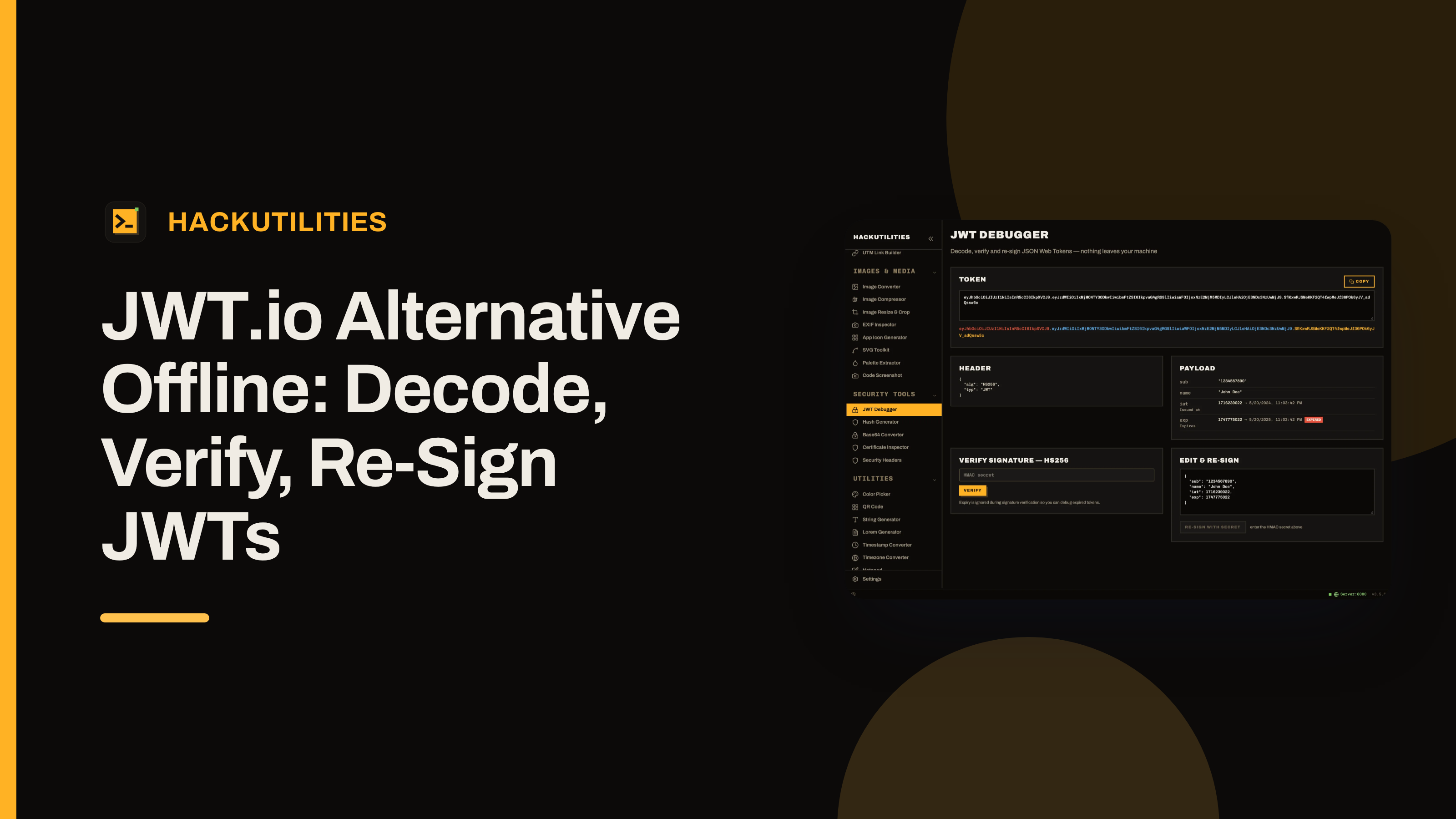
JWT.io Alternative Offline: Decode, Verify, Re-Sign JWTs
A practical local JWT debugging workflow: decode claims, inspect exp and nbf, verify signatures with the right key material, and re-sign HMAC tokens without network requests.
5 min read
Notes on AI agents, terminals and developer tooling from the HackUtilities team.
A practical local JWT debugging workflow: decode claims, inspect exp and nbf, verify signatures with the right key material, and re-sign HMAC tokens without network requests.
5 min read
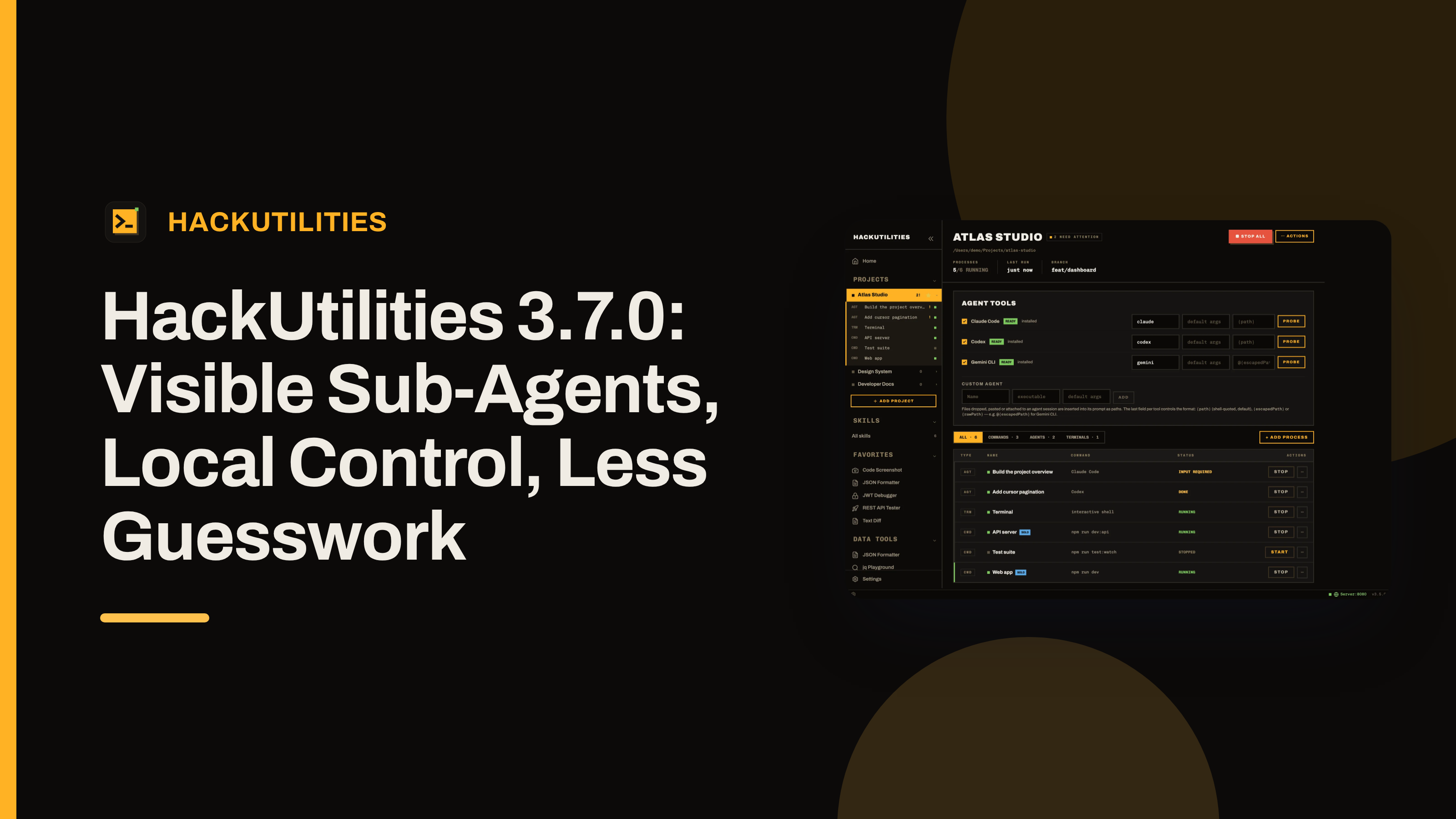
Hi 👋 HackUtilities v3.7.0 is out. Here’s the TL;DR on visible sub-agents, local MCP control, Windows improvements, and the keyboard changes I’d learn first.
4 min read
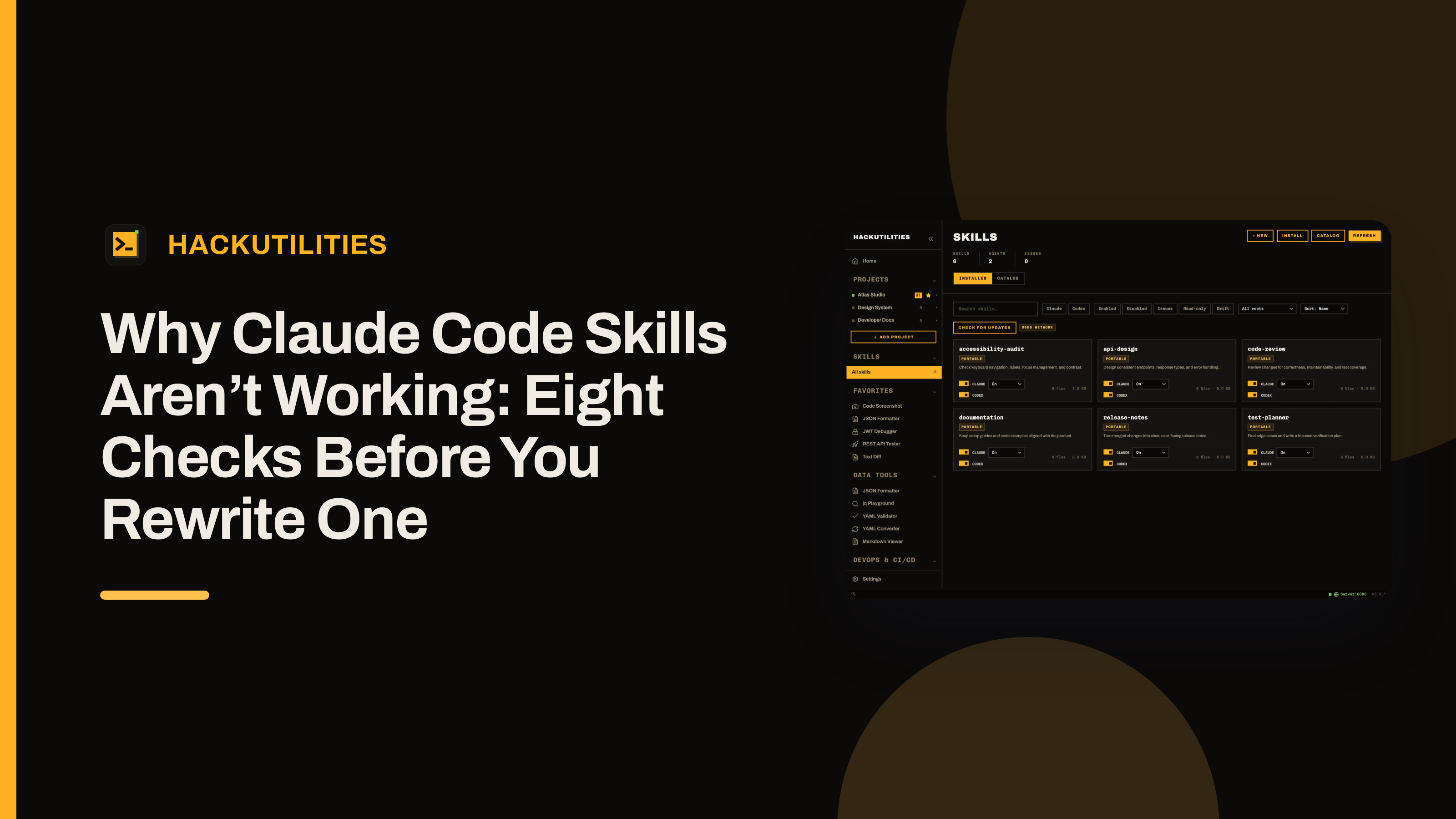
Separate discovery, autocomplete, invocation and instruction-following failures. Work through eight checks, then retest against an observable result instead of rewriting the skill blindly.
5 min read
Start a web server, API, queue worker and asset watcher with one npm command, then save the daily stack in HackUtilities. Includes port-conflict recovery and shell-environment troubleshooting.
6 min read
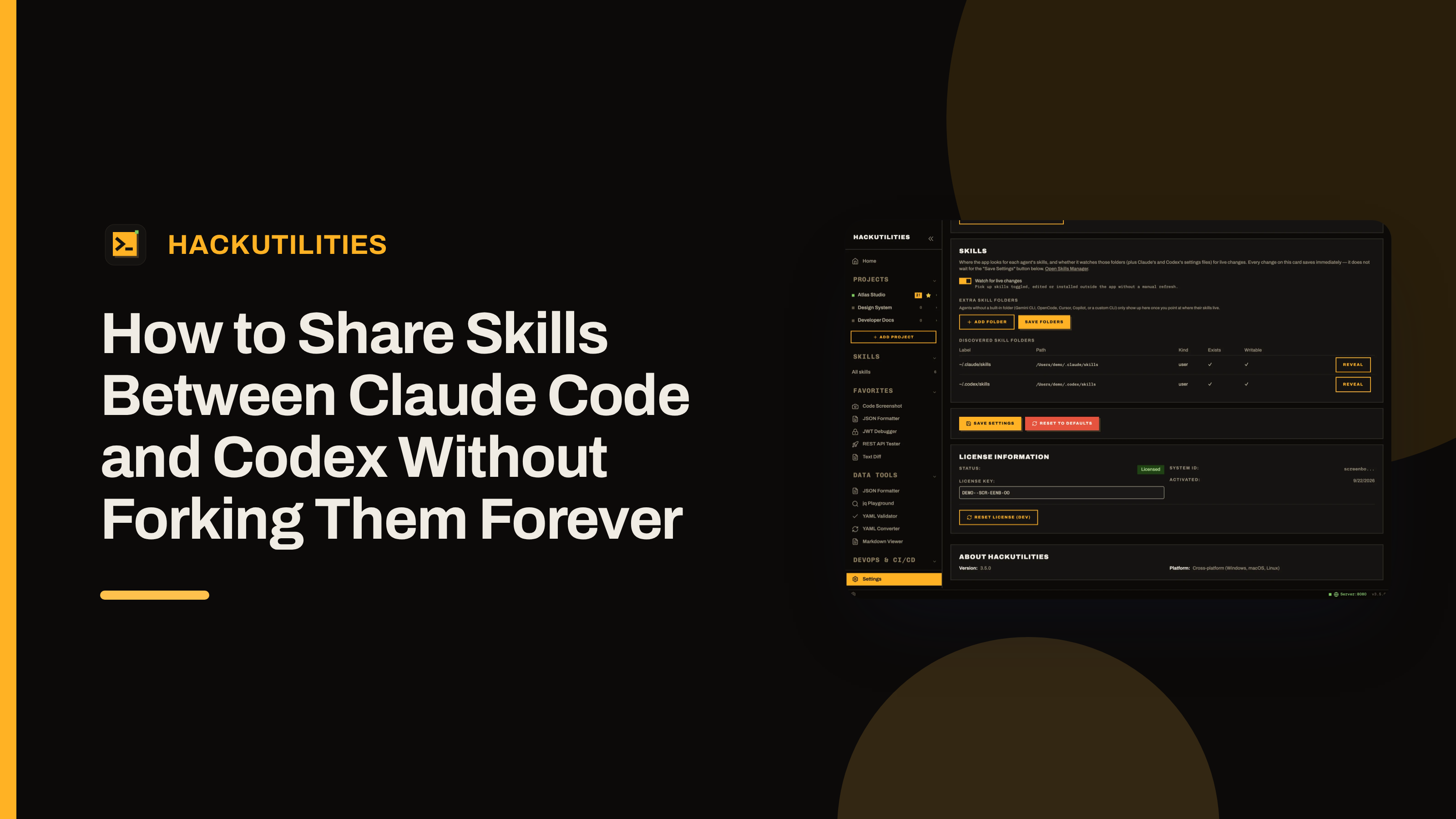
A practical workflow for making one skill usable in both Claude Code and Codex without hand-editing dotfiles or losing track of which copy changed.
6 min read
Most UUID lookup searches are asking the wrong question. This article shows when a UUID can reveal a timestamp, when it cannot, and how to use that clue to trace the real record in your own system.
4 min read
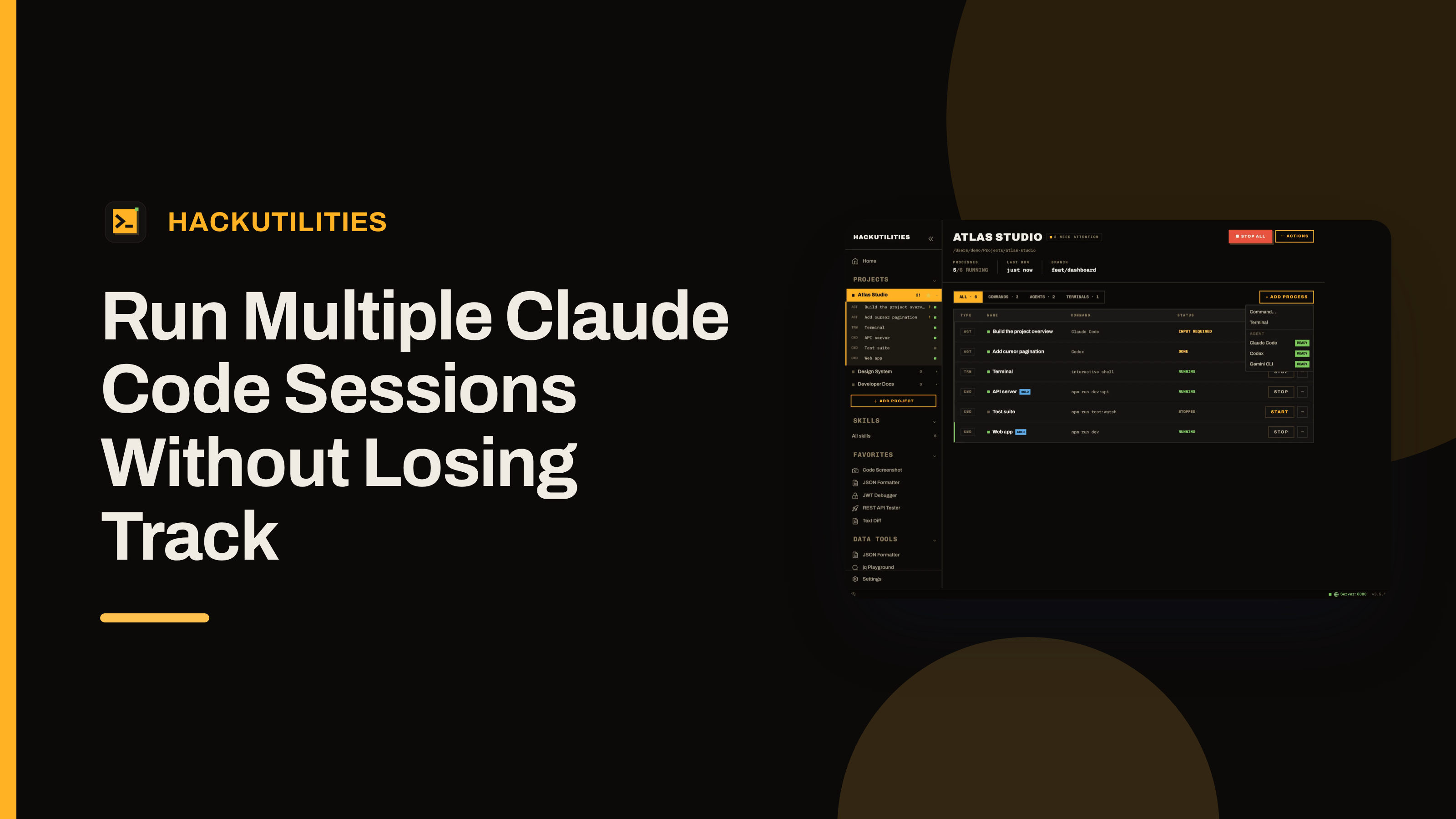
This guide shows a repeatable 3-session workflow for one repo: bugfix, refactor, and tests. It also gives a clear rule for when to stay in one checkout and when to split environments.
7 min read
See which tmux jobs map cleanly to HackUtilities for local development on macOS and Windows, where the fit is better, and where tmux still wins.
8 min read
A plain-English launch post that explains what HackUtilities does, what this blog will cover, who it’s for, and how to test the app on a real repo.
5 min read